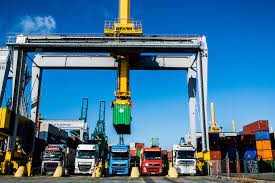

Houston may restrict cargo truck movements inside city limits
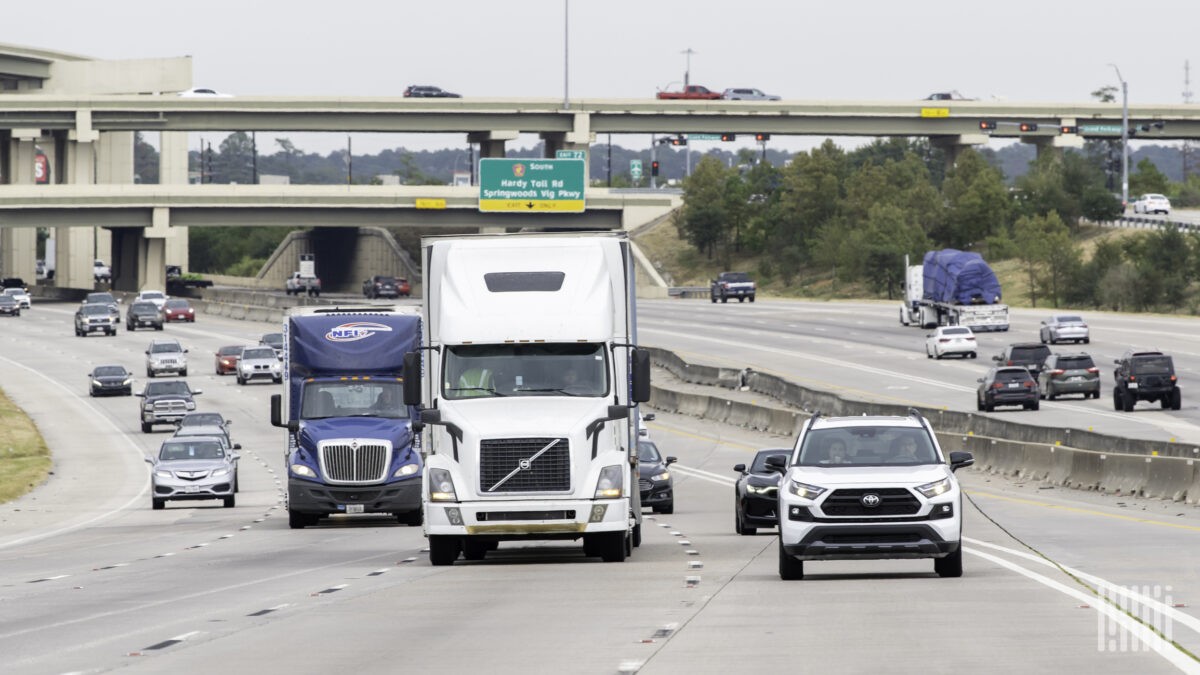
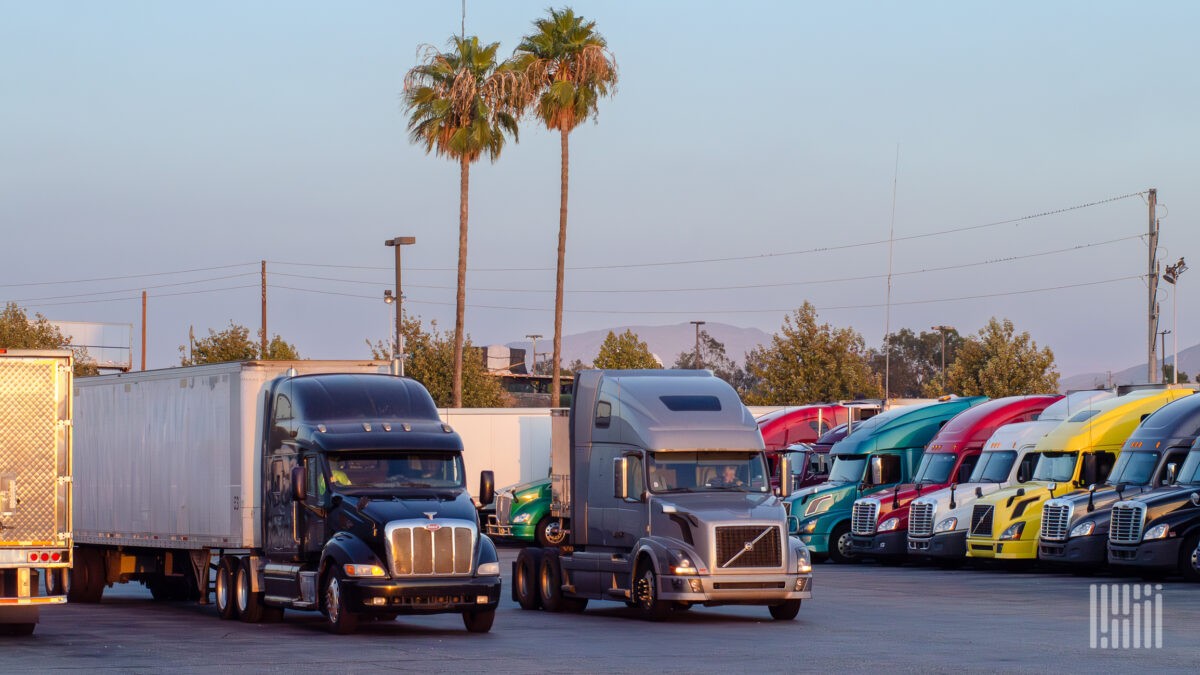
Houston could soon become the largest U.S. city to enact a broad truck route plan to limit where tractor-trailers can travel as they move through town.
City officials have proposed a regulation that would limit commercial trucks to main roads, banning them on many smaller streets.
The aim of the measure is to improve roadway safety and the quality of life in Houston, according to Muxian Fang, a planner manager for the city of Houston’s Planning & Development Department.
“The Citywide Truck Route Plan (TRP) is an action item of the Vision Zero action plan to eliminate fatalities and serious injuries on our roadways,” Fang said in an email to FreightWaves. “We have received many complaints from our residents about how the cut through truck traffic has created traffic safety hazards, roadway damages, and [reduced] quality of life in their neighborhoods.”
Vision Zero is an initiative from the Federal Highway Administration adopted by cities across the country to eliminate all traffic fatalities and severe injuries, while increasing safety on roadways.
Houston’s TRP proposes dedicating a limited set of roads as truck routes for any commercial vehicle having a gross weight of more than 26,000 pounds, including the load carried. The routes would be designated into three categories:
Through truck routes: primary routes for commercial vehicles traveling within and through the city, including interstates, state highways, toll roads, critical urban freight corridors and roadways that are functional and suitable for truck traffic.
Local truck routes: major thoroughfares that provide direct access to local origins and destinations and can serve as alternate truck routes in case of through truck route closure for construction or emergencies.
No-through-truck streets: road segments where through truck traffic is prohibited, which can only be used to access local origins and destinations.
The designation process to finalize truck routes is currently underway. The department will conduct a pilot test in the Settegast neighborhood in northeast Houston next spring before the truck plan is finalized.
Muxian Fang, a planner manager for the city of Houston’s Planning & Development Department, holds a public meeting in May with residents to discuss the proposed Citywide Truck Route Plan. (Photo: city of Houston)
If the plan moves forward, carriers violating it and traveling on no-through-truck streets could be fined up to $500.
Fang said Houston’s Planning & Development Department initiated a series of public engagement activities to involve all stakeholders in the TRP effort.
“We have been coordinating with the Texas Department of Transportation, Houston-Galveston Area Council, Port of Houston Authority, Harris County, [and] Houston Movers Association to develop the Citywide Truck Route Plan,” Fang said. “All of our stakeholders support this effort.”
John Esparza, CEO of the Texas Trucking Association, said that while he appreciates that Houston officials are approaching the issue of truck traffic through a planning process, he has concerns about a broad plan that doesn’t take into account the daily operations of local trucking companies.
“We maintain if there are particular problems with local schools or neighborhoods – let’s address those,” Esparza told FreightWaves. “In a city that’s not zoned, I can only hope that they’re taking into account every trucking company, that is, where the companies are located and their proximity to residential areas.”
The city does not have zoning laws, but development is governed by ordinance codes that address how property can be subdivided, according to the city’s website.
“Since Houston is not zoned, we’re talking about a trucking community of companies that can be right near residential areas, so how does the city determine what is a truck trying to egress and ingress out of their operations, and get to where they need to go and deliver the freight,” Esparza said. “I do hope that they’re listening to the companies in Houston, as they raise those specific concerns, over restrictions on where trucking companies can get in and out of their operations and where they deliver. Anytime you see these restrictions being proposed, it ultimately is going to come down to affecting the way that that motor carrier operates.”
Houston one of the fastest-growing US port cities
With a population of 2.3 million, Houston is the largest city in Texas and the fourth-largest in the U.S. The greater Houston metropolitan area is home to 7.3 million people and could grow to more than 8 million by 2028, according to a recent study by real estate consultant Site Selection Group.
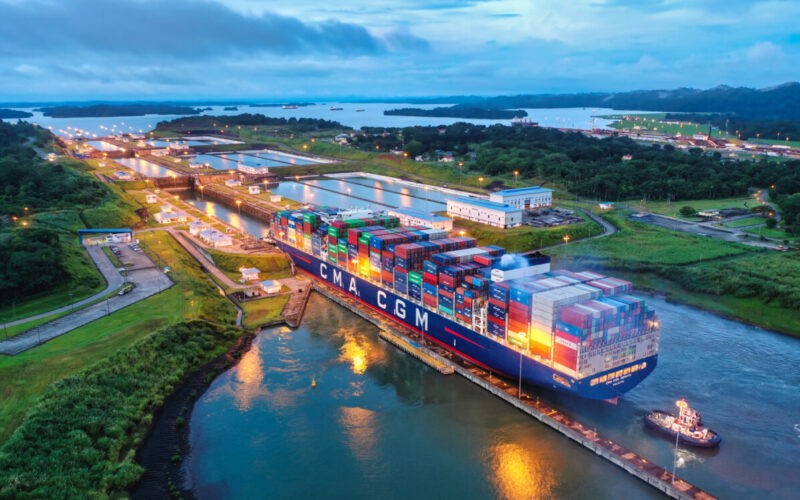
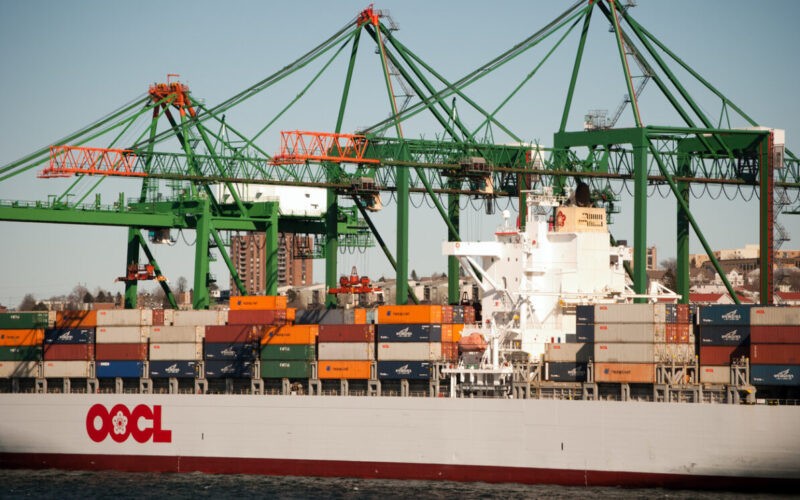
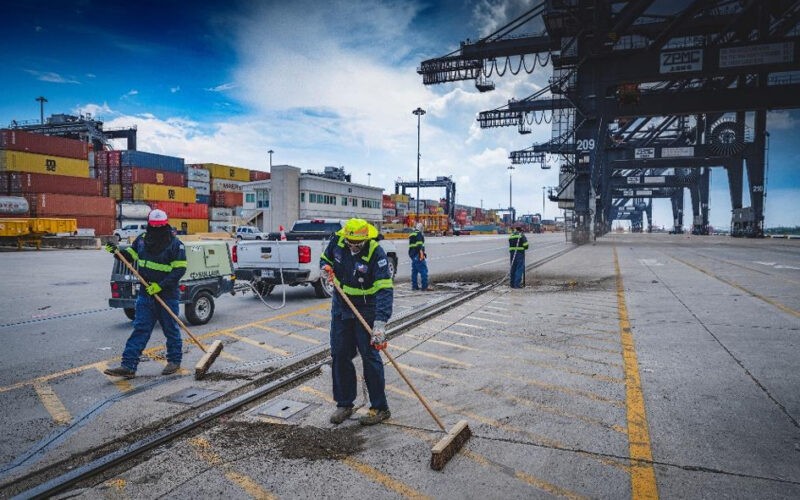
Houston is also one of the busiest port cities in the country. The 52-mile Houston Ship Channel comprises more than 200 private and eight public terminals, collectively known as Port Houston.
The port and ship channel helps create about 1.5 million jobs throughout the state and generates about $439 billion in statewide economic impact annually, according to a study by Port Houston.
Port Houston is one of the busiest seaports in the U.S. and helps to generate about 1.5 million jobs throughout the state of Texas, according to a recent study. (Photo: Jim Allen/FreightWaves)
Port Houston ranked as the fifth-largest U.S. container port by total twenty-foot equivalent units in 2022, at 3.9 million TEUs. Total tonnage last year was up 22% year over year (y/y) compared to 2021, reaching 55 million short tons, a new record, according to the port.
Over the past several years, supply chain diversification across the U.S. has helped Port Houston increase its market share of container traffic, as well as imports and exports of products such as steel and resins.
Chart: FreightWaves SONAR — U.S. customs maritime import TEUs for Houston (CSTEU.USHOU) and Los Angeles (CSTEU.USLAX).
Customs data from FreightWaves’ SONAR platform shows that Port Houston’s inbound container volumes have increased steadily since 2019 but rose and declined sharply in September and October, falling 8% y/y in September to 325,588 TEUs. While freight traffic has remained steady for most of the year, it is down compared to the record results of 2022, Roger Guenther, the port’s executive director, said at a recent commission meeting.
Trucking company has concerns about route plan
Jefferson Walker, operations manager at Houston-based carrier J.H. Walker Trucking, expressed disappointment and concern about the proposed truck route plan.
“We as a carrier are frustrated by the idea of restricting our ability to move and operate around the city of Houston,” Walker told FreightWaves. “We do not feel it is necessary as it will only be used as a way to ticket us and impede our ability to operate and do business around the city.”
Source: freightwaves.com