
The biggest freight brokerage layoffs and bankruptcies in 2023
Compared to trucking carriers, freight brokerages can avoid shutdowns even during nasty freight recessions.
But, since new capacity flooded the trucking industry and consumers stopped buying as much stuff, third-party logistics companies have seen an unusual threat to their business operations. We’re now seeing big layoffs and company shutdowns.
“Typically, freight brokerages manage revenue volatility through flexible operating expenses: Computers and chairs don’t cost much, and incentive-based compensation grows and contracts with market cycles,” FreightWaves strategic analyst John Paul Hampstead wrote in July. “That’s why hiring sprees and layoffs at freight brokerages are relatively common, but outright failures are relatively rare.”
A freight broker is the intermediary between a carrier (or transportation provider, like a truck driver) and a shipper (whoever is trying to move goods, like a retailer or manufacturer). There are also freight forwarders, who are more exposed to international shipments and the customs involved.
Here are the biggest freight broker layoffs in 2023 so far. You can see a list of freight broker layoffs in 2022 here and a list of all layoffs and shutdowns in the freight industry here.
Jan. 11: Flexport, approximately 20% of workforce
The co-CEOs of Flexport, a San Francisco-based freight forwarder, published a memo on Jan. 11, saying the company was reducing its workforce by around 20%.
Increasingly automated systems along with lower freight volumes meant the company would need fewer employees than in previous years. As executives Dave Clark and Ryan Petersen wrote in the memo:
“We are overall in a good position but are not immune to the macroeconomic downturn that has impacted businesses around the world. Our customers have been impacted by these challenging conditions, resulting in a reduction to our volume forecasts through 2023. Lower volumes, combined with improved efficiencies as a result of new organizational and operational structures, means we are overstaffed in a variety of roles across the company.”
Clark announced on Sept. 6 he was leaving Flexport; the board fired him, as FreightWaves first reported. Petersen is the sole CEO of Flexport.
Flexport has raised some $2.4 billion in funding since its founding in 2013.
Jan. 23: Uber Freight, approximately 3% of workforce
FreightWaves’ John Kingston first reported on Jan. 23 that Uber Freight, the Chicago-based freight brokerage arm of ride-sharing giant Uber, would cut about 150 jobs from its digital brokerage division. That’s 3% of Uber Freight’s total workforce.
“As you know, the logistics market is currently facing a number of headwinds, which has impacted our customer base as well as the overall industry,” CEO Lior Ron said in a memo to the staff obtained by FreightWaves. “We accelerated hiring last year within certain areas of our brokerage business, planning for a different economic reality, but the volumes did not materialize as expected.”
An Uber Freight spokesperson noted the issue of oversupply of transportation capacity in an emailed statement to FreightWaves on Feb. 23.
“Volatility is a given in our industry,” the spokesperson wrote. “In stark contrast to last year when demand was surging, today the market is oversupplied and shippers are looking to rationalize their logistics spend. These dramatic changes in the market capture why it’s so critical to have the right partners and technology in place.”
Uber Freight was established in 2017.
Feb. 16: Convoy, undisclosed number affected
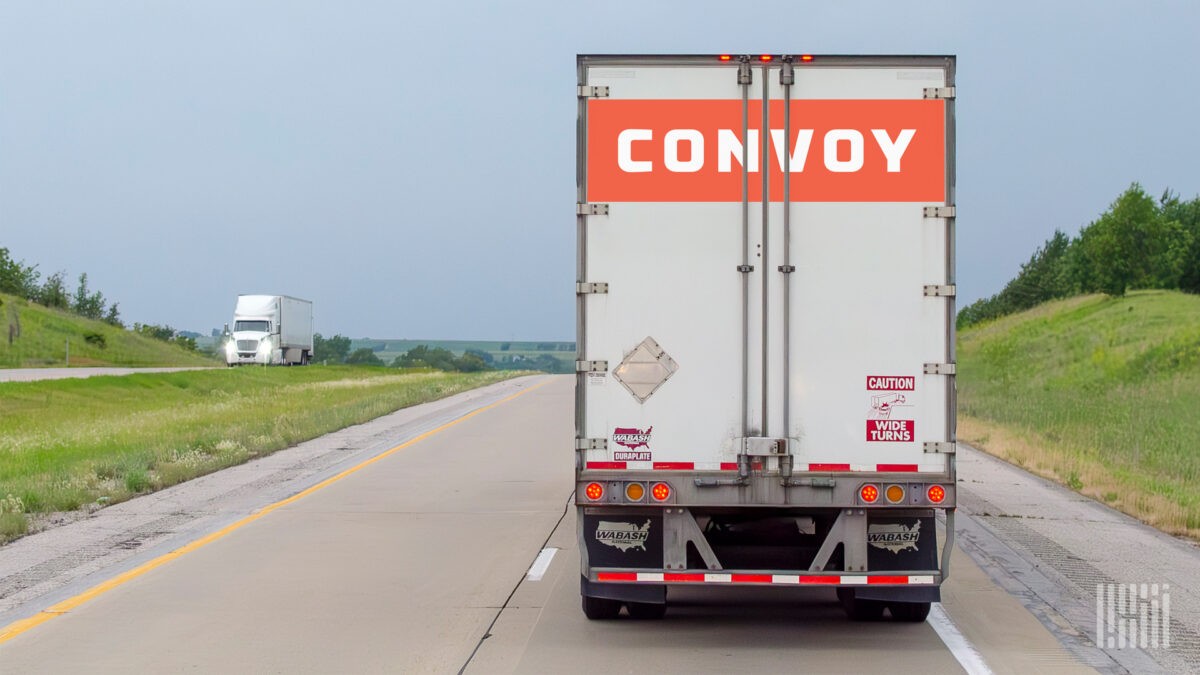
Convoy co-founder and CEO Dan Lewis wrote in a Feb. 16 LinkedIn post that the company was restructuring and would eliminate an undisclosed number of roles. It would also shutter its Atlanta office.
Lewis wrote that the company’s increasingly automated freight brokerage process changed its staffing needs. A company spokesperson declined to comment further on this layoff at the time.
Founded in 2015, Convoy has attracted investments from Amazon founder Jeff Bezos, Salesforce founder and CEO Marc Benioff, and Microsoft co-founder Bill Gates. The company was valued at $3.8 billion last year, when it raised $260 million in a Series E funding round.
Source: freightwaves.com