
Synop aims to reshape supply chains starting with EV drayage trucks
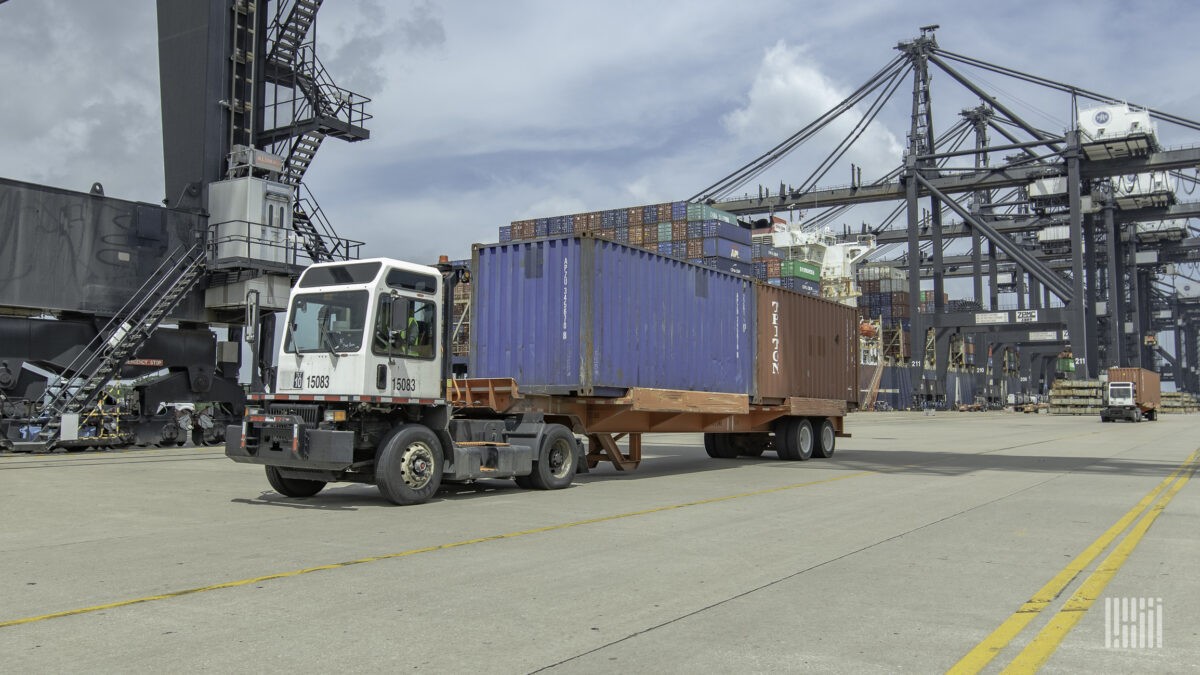
Synop co-founder Gagan Dhillon considers drayage trucks, which move freight from ports to distribution warehouses, as a good entry point for more commercial electric vehicles to make their way into the logistics sector.
New York-based Synop is a charging and energy management software platform for commercial EVs. Dhillon founded the company with Andrew Blejde in 2021. Synop’s customers include OEMs, fleet operators and real estate firms, such as Prologis and The Lion Electric Co.
“Drayage was something that I had in mind when we started [Synop] because I saw a lot of the efforts that the ports were making to decarbonize just their own vehicles,” Dhillon told FreightWaves. “You think about these loaders that they have, the little autonomous trucks that drive around the ports, some ports were starting to electrify them.”
Dhillon said improvements in battery technology and EV commercial trucks make battery-electric trucks ideal for operators that want to decarbonize parts of their supply chains.
“If you think about where battery technology is, a typical Volvo VNR electric truck has about 130 to 140 miles of range. You can do multiple trips with that from places like California’s Inland Empire to the Port of Long Beach and back,” Dhillon said. “The use case for drayage is really perfect. The charging technology can have you charged within 90 minutes and be back up on the road, so the driver gets to meet their downtime requirements as well.”
Medium- and heavy-duty trucks are one of the largest transportation-related sources of greenhouse gas emissions every year, according to the Environmental Protection Agency. Commercial trucks accounted for about 23% of emissions from the transportation sector in 2021.
A recent study found that 483 premature deaths and 15,468 asthma attacks could be attributed to heavy-duty drayage trucks in 2012 in Southern California alone.
California pushes for zero-emissions drayage vehicles by 2035
Widespread adoption of medium- and heavy-duty electric trucks has been slowly increasing since 2016, when fewer than 17,000 were sold across the globe, according to the International Energy Agency. About 60,000 medium- and heavy-duty trucks were sold worldwide in 2022, with the majority of sales in China.
“We’re seeing EVs spreading. It’s the same fleets that are investing in electrification on the West Coast that are looking to take that to the East Coast because the total cost of ownership (TCO) of electrifying these assets is going to quickly catch up to the TCO of a diesel vehicle,” Dhillon said.
Last year, Port Houston acquired its first EV drayage truck, which is being used to transport freight at its Bayport Container Terminal. The truck, manufactured by Nikola Corp., has a range of up to 350 miles, and it can charge up to 80% in under two hours.
Port Houston has announced a goal to be carbon neutral by 2050. The port is working toward eventually eliminating dockside emissions and helping implement green shipping corridors as well as green marine and road fuels.
“Port Houston facilities are just one part of the overall equation,” Port Houston Executive Director Roger Guenther said in a news release. “Reductions are needed throughout the supply chain, including ships, trucks, tenants and other operators.”
Source: freightwaves.com