
FedEx warns of higher costs under trucker rest break waivers
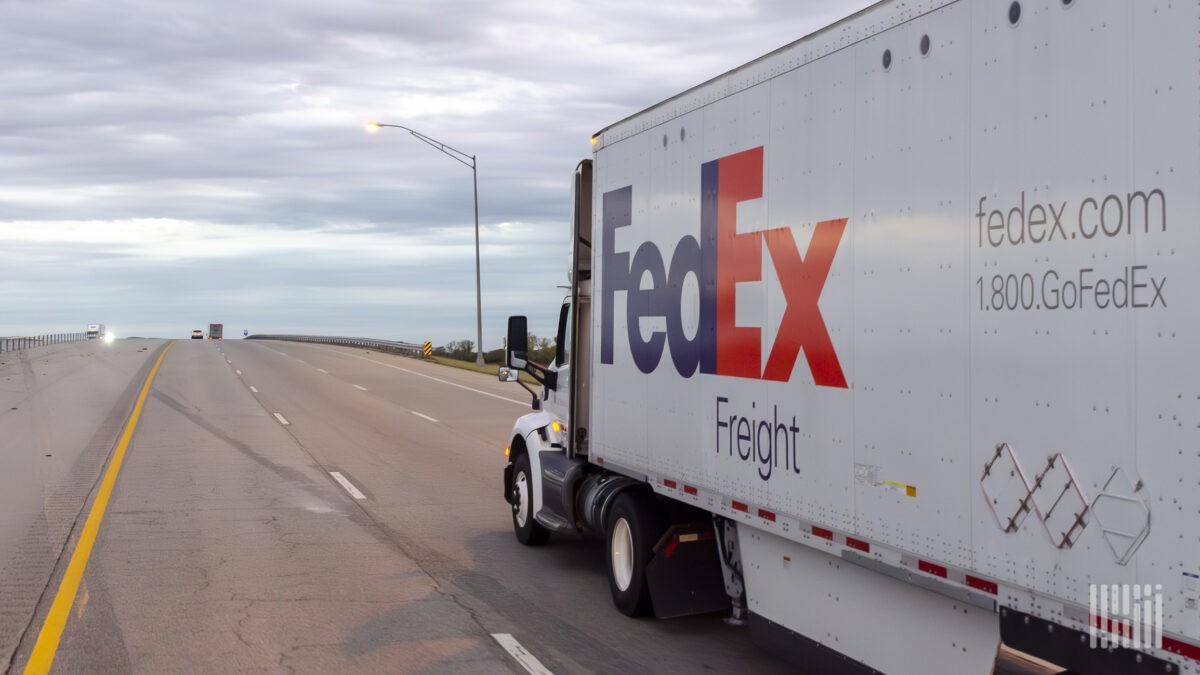
WASHINGTON — FedEx Corp. predicts higher costs on its linehaul and delivery routes as well as those of rivals if the Biden administration approves waivers governing truck driver meal and rest breaks in California and Washington.
In comments filed with the Federal Motor Carrier Safety Administration, FedEx (NYSE: FDX) asserted that if the FMCSA were to waive its preemption over the two states’ meal and rest break (MRB) laws — which would make interstate carriers subject to the stricter state rules — it will cause financial havoc as well as decrease safety.
“State rules on meal periods and rest breaks require FedEx and other transportation companies to revise routes, as well as compensation plans and policies, at a great operational cost,” wrote FedEx Corporate Vice President Clement Klank.
“The addition of this break time, some of which is paid time, increases labor costs to the tune of multiple millions of dollars each year.”
Moreover, according to Klank, “unnecessary but required breaks increase the length of a driver’s workday and their time away from home, having a negative impact on both driver fatigue and driver morale.”
In California, truck drivers must be provided a 30-minute meal break if they work more than five hours in a day, and drivers who work a shift of 10 hours or more are entitled to a second 30-minute meal break. Drivers are also entitled to a 10-minute rest period for each four hours that they work in a day. Washington’s rules are similar.
In contrast, federal break rules require that truck drivers only take a 30-minute break after eight hours of driving time (instead of on-duty time) and allow an on-duty/not driving period to qualify as the required break.
Under pressure to reduce injuries and deaths from crashes involving heavy trucks, FMCSA in August 2023 notified the trucking industry that it would entertain requests to waive agency decisions made in 2018 and 2020 that ruled federal hours-of-service rules (HOS) preempt MRB laws in California and Washington, respectively, for interstate trucking. (The preemption didn’t affect the states’ ability to enforce their MRB laws on drivers registered to haul only within the state.)
The two Trump-era decisions, made in response to petitions filed by the American Trucking Associations and the Washington Trucking Association, determined that MRB rules in those states are more stringent than federal regulations, a criteria that opens the door for federal preemption.
In last year’s notice, FMCSA encouraged those requesting a waiver not to argue that the agency’s 2018 and 2020 determinations were wrong procedurally, but rather to show whether intrastate drivers in California or Washington still subject to those states’ MRB laws are safer than interstate drivers.
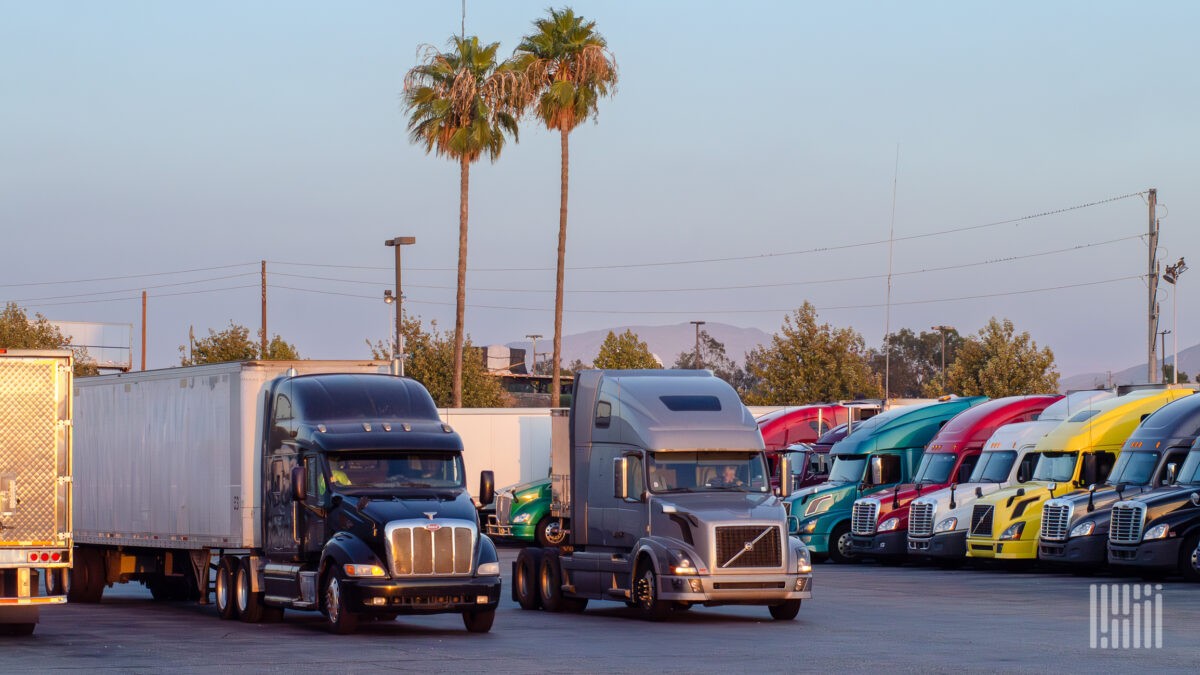
FMCSA also encouraged applicants to address whether requiring interstate carriers to comply with the stricter MRB laws could exacerbate truck parking shortages in those states — and if so, how to mitigate that effect if a waiver were granted.
In addition, waiver applicants were asked to address whether applying California or Washington’s MRB laws to interstate haulers would deter those carriers from hauling in those states, and if so, if that could end up weakening the national supply chain.
Source: freightwaves.com