
Biden administration acknowledges ‘challenge’ with new truck emissions rule
WASHINGTON — The Biden administration acknowledged that its aggressive push to decarbonize trucking will be costly — but that the federal government will be here to help.
“The overarching challenge is aligning the market-driven desire from fleets to adopt zero-emission freight vehicles with the resources required to make it successful, and right now, they cost more,” said Gabe Klein, executive director of the U.S. Joint Office of Energy and Transportation.
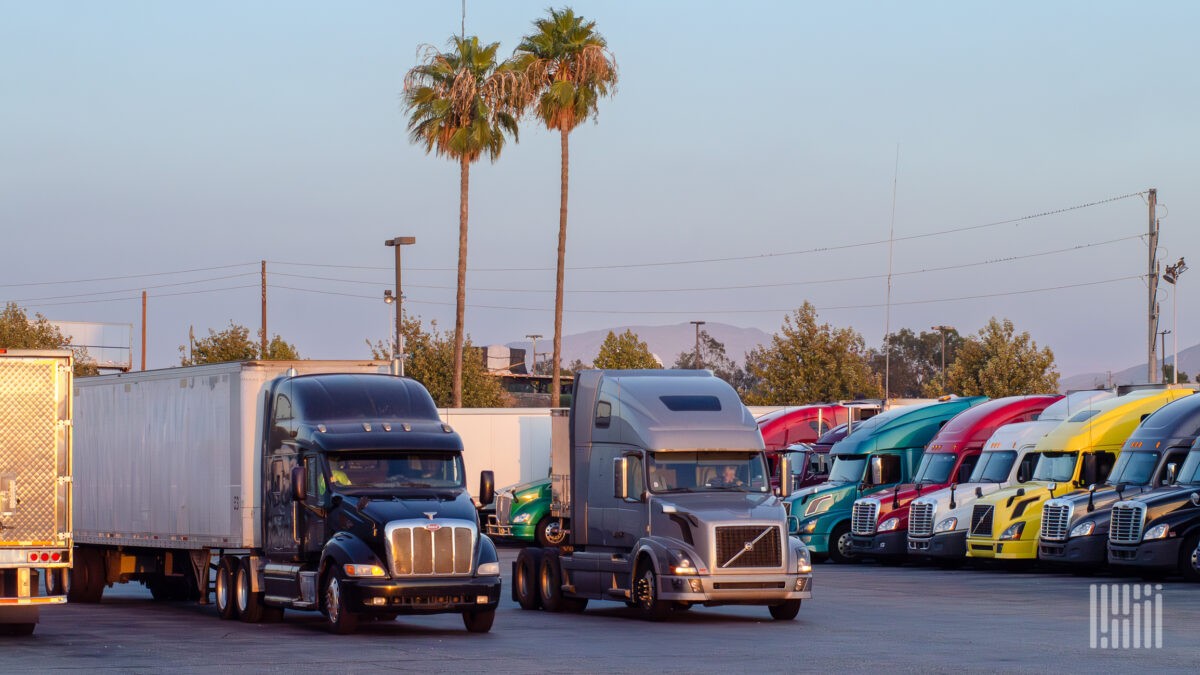
Speaking to NPR before the release on Friday of the U.S. Environmental Protection Agency’s new phase-three truck emissions rule, Klein said that “cost parity” has yet to be reached that would make electric trucks as affordable. A new Class 8 diesel truck costs roughly $180,000 compared with up to $400,000 for a battery-electric truck, according to estimates.
“That’s why the federal government is providing subsidies, to bring it down closer to cost parity,” he said. “I will also say the charging infrastructure is of course a limiting factor. So we need to make sure everybody has access, not just the big fleets and companies.”
EPA’s “Greenhouse Gas Emissions Standards for Heavy-Duty Vehicles – Phase 3” final rule, which applies to model years 2027 through 2032, avoids 1 billion tons of greenhouse gas emissions — equivalent to the emissions from more than 13 million tanker trucks’ worth of gasoline, according to the agency. EPA also estimated $13 billion in annualized public health benefits.
“In finalizing these emissions standards for heavy-duty vehicles like trucks and buses, EPA is significantly cutting pollution from the hardest working vehicles on the road,” commented EPA Administrator Michael Regan. “Building on our recently finalized rule for light- and medium-duty vehicles, EPA’s strong and durable vehicle standards respond to the urgency of the climate crisis by making deep cuts in emissions from the transportation sector.”
Source: freightwaves.com