
Sagging intermodal results, broad volume weakness sink J.B. Hunt’s Q2
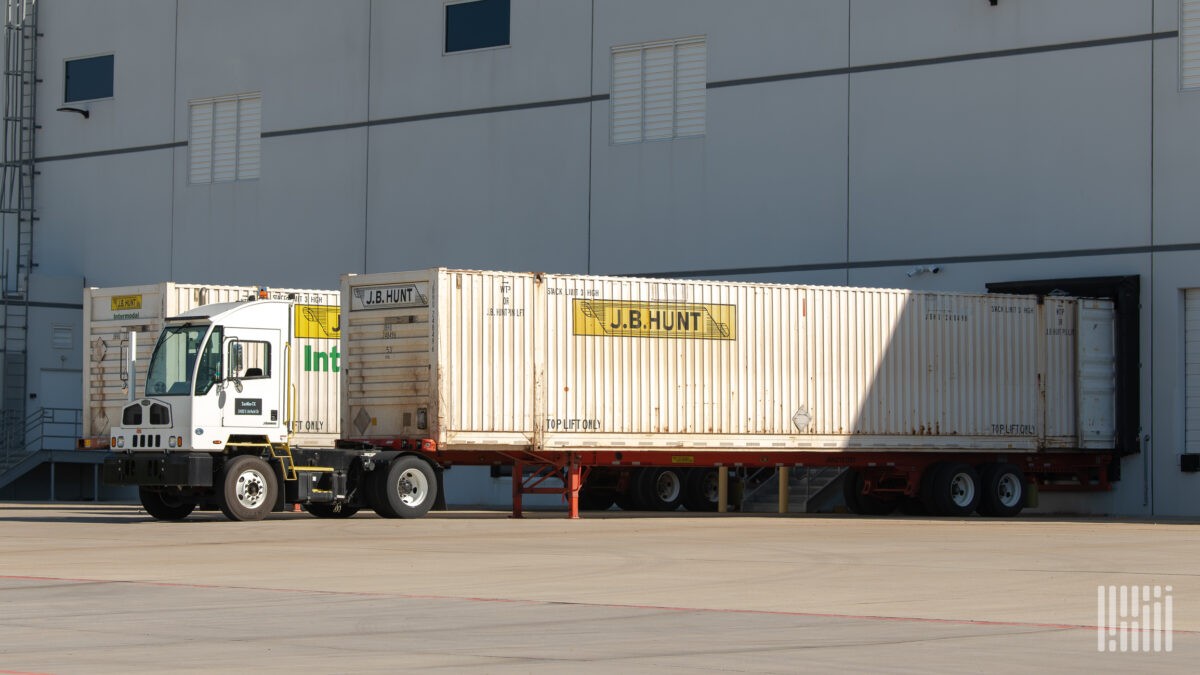
A decline in intermodal yields, weaker volumes across all of its transportation offerings and elevated expenses were among the reasons for J.B. Hunt Transport Services’ second-quarter earnings miss.
The multimodal transportation provider reported second-quarter earnings per share of $1.32 Tuesday after the market closed. The result was 49 cents lower year over year and 16 cents below the consensus estimate.
A higher tax rate compared to the year-ago quarter was a 1-cent headwind. Higher interest expense due to an increase in rates was a 4-cent headwind. (J.B. Hunt’s debt balance increased just $30 million y/y in the quarter to $1.48 billion.)
Click for full report – “J.B. Hunt stays the course despite burdensome capacity costs”
Intermodal revenue fell 6% y/y to $1.41 billion as revenue per load was down 5% y/y, 2% lower than in the first quarter.
The intermodal unit lost market share in the period as loads fell 1% y/y compared to total intermodal traffic on the U.S. Class I railroads, which was up 8% y/y, according to the Association of American Railroads. Transcontinental loads were up 4% y/y, in part due to a weaker comparison to the prior year, while loads in the truck-competitive Eastern portion of the network fell 7% y/y.
“While experiencing some seasonal build in demand through the quarter, overall performance continued to be pressured by the soft freight market and its impact on over-the-road truck competition in the eastern network,” a news release read.
The unit recorded a 92.9% operating ratio (operating expenses as a percentage of revenue), which was 250 basis points worse y/y and 20 bps worse than the seasonally weakest first quarter. The company cited lower yields, underutilized equipment and increased equipment costs as factors.
J.B. Hunt (NASDAQ: JBHT) has been onboarding capacity as it expects an eventual turnaround in the business.
Source: freightwaves.com