
Why Walmart pays its truck drivers 6 figures
One Walmart truck driver says he has 15 years left of working, and he intends to spend them hauling loads for Walmart. “Barring a lottery win or marrying a sugar mama, I don’t see myself going anywhere,” said the Texas-based driver, who asked not to have his name included as he is not authorized to speak on behalf of the company.
Such loyalty to a single company is unusual in trucking, an industry notorious for massive turnover. And the Texas trucker isn’t alone in his dedication to Walmart. One of the best jobs you can get in trucking is at Walmart. The uber-retailer says truck drivers can make up to $110,000 in their first year at the company. That’s twice the nationwide median pay of a truck driver, and certainly above the $17.50 an hour that the average Walmart associate earns. Home time, paid vacation and good health insurance are also guaranteed for Walmart company drivers. These offerings are elusive in the trucking world.
It’s not out of the goodness of Walmart’s corporate heart that it pays truck drivers a truckload. Rather, truckers are key to Walmart’s retail dominance — and they have been from the start. Without a highly engaged trucking workforce, it’s not likely that the company would have flourished in the way it has. The Fortune 1 company prioritized supply chain long before it became a buzzword.
“At Walmart, we believe in offering our drivers a competitive compensation package to attract the best drivers in the industry,” a Walmart spokesperson told FreightWaves in an emailed statement.
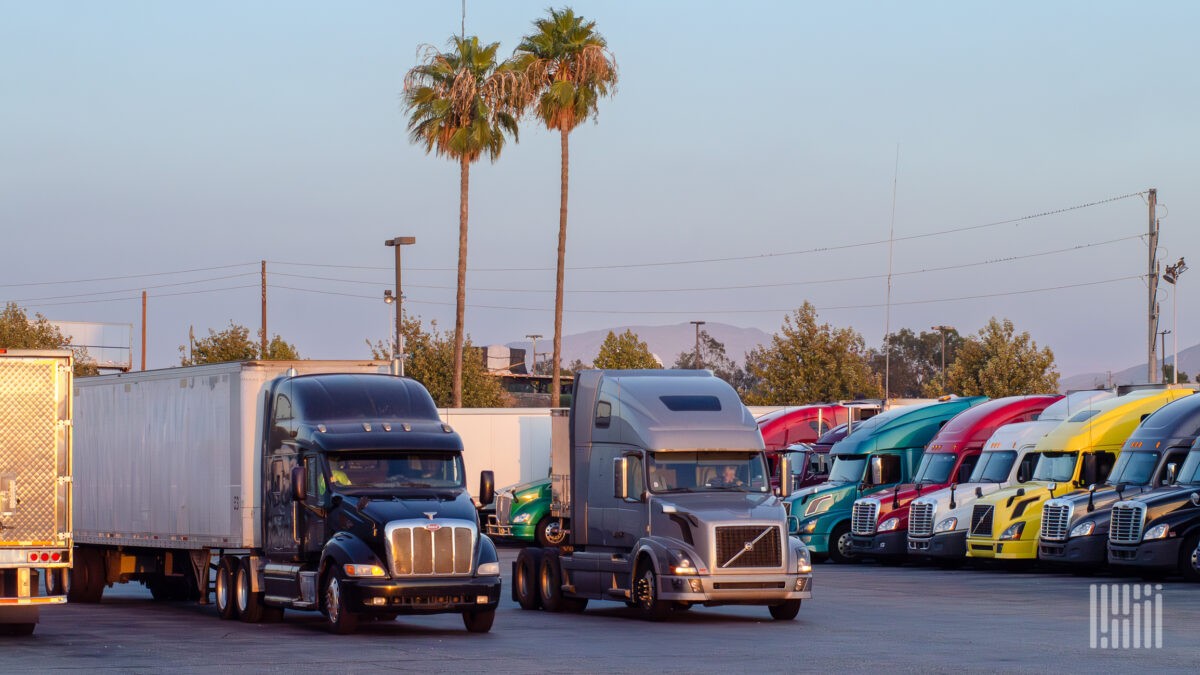
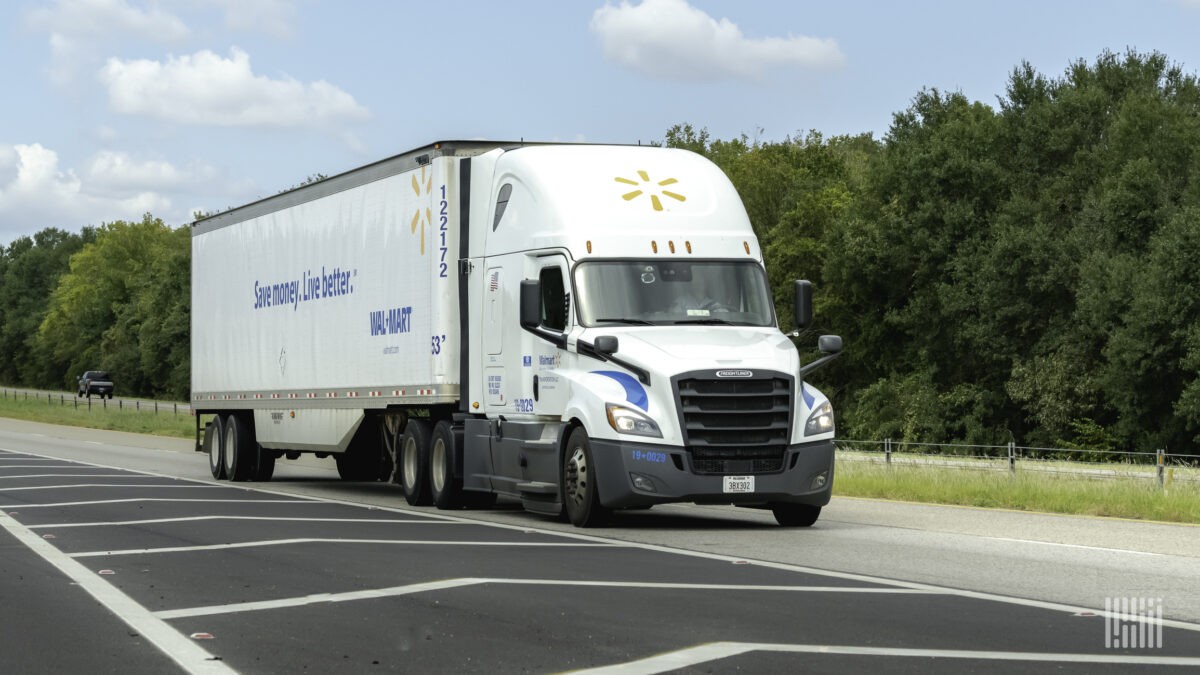
Walmart company drivers are historically some of the most elite in the industry. (Photo: Jim Allen/FreightWaves)
Walmart employs some 14,000 drivers, which makes it comparable to some of the largest for-hire fleets in the U.S. It’s added 5,800 drivers to the company in the past five years alone.
Recently, Walmart has shifted some of its strategies around recruiting those new drivers. In 2018, Walmart changed its truck driving recruitment program to allow more drivers to pass its program. A senior vice president at Walmart told Yahoo! Finance at the time it was because of a “shortage” of truck drivers. (Those who study the trucking industry dispute that such a shortage exists, concluding that drivers leave the industry for jobs with better pay and hours.)
Last year, Walmart announced another key pivot. The company said in January 2023, building on a pilot it launched the year before, that it would allow Walmart associates living in participating locations to apply to a 12-week CDL program. For perhaps the first time, a Walmart company driver doesn’t need years of experience to get behind the wheel of its branded 18-wheelers. It may be that Walmart’s tack on trucking is changing.
Operating in the boondocks forced Walmart to become a distribution whiz
Decades before Walmart became the biggest company in the world — raking in $611 billion in revenue last year — its leadership team couldn’t find anyone to haul freight to its first stores. Walmart operated mostly in the boondocks, far from where most trucking companies wanted to go.
“We couldn’t find anybody who wanted to run their trucks 60 or 70 miles out of the way into these little towns where we were operating,” Don Sonderquist, an early Walmart executive, explained in an interview published in 1992. “We were totally ignored by the distributors and the jobbers. That’s not only how we came to build our own distribution system, it’s also how we got used to beating the heck out of everybody on prices.”
This forced founder Sam Walton to build up his own network of suppliers, too. Walmart elected to work directly with the brands it sells in-store, which still allows the company unusual control over the minutiae of the products of some very large companies, according to journalist Charles Fishman, the author of the 2006 book “The Wal-Mart Effect.”
Walmart employed 2.1 million associates, per its 2022 financial statement. It’s the largest private employer in the world. (Photo: Jim Allen/FreightWaves)
This hyperfocus on supply chain and distribution shaped key decisions from the top to the bottom of Walmart’s operations. That’s according to two people who have closely studied Walmart: Fishman and historian Nelson Lichtenstein, author of the 2006 book “Wal-Mart: The Face of Twenty-First-Century Capitalism” and professor at the University of California, Santa Barbara.
When Walmart sought to open a new store, Fishman and Lichtenstein explained, it built the distribution center. Then, it built stores within a one-day drive of that distribution center. This might seem like an obvious strategy in 2024, but it was somewhat revolutionary in the mid-20th century. Kmart, for example, targeted the same blue-collar Americans that Walmart did. However, Kmart would simply plop stores into suburbs that had plenty of customers. Distribution was an afterthought.
“Walmart has become the largest company in human history by doing something that was already being done, better than anyone else did it,” Fishman said. “Logistics and transportation is one of the things that made Walmart, Walmart, and allowed them to outcompete.”
Source: freightwaves.com